The History and Culture of the Ewe People of Ketu North, Ghana
Learn about the history of the Ewe communities of Afife, Weta, Penyi, and Dzodze in Ghana’s Ketu North District, including their origins, traditional leadership, farming, Kente weaving, pottery, religious practices, and festivals.
The Ewe people of Ketu North District in Ghana's Volta Region have a long history shaped by migration, farming, traditional craftsmanship, music, religion, and community life. Their customs and traditions are closely connected to the wider Anlo Ewe cultural heritage, which continues to influence life across the district.
The district is home to four main traditional groups: Afifewo, Wetawo, Penyiwo, and Dzodzewo. According to their historical accounts, these groups trace their origins to Notsie, in present-day Togo, from where their ancestors migrated before settling in their current communities.
Although the four groups have their own traditional leadership and histories, they share many cultural practices. Their language, food, clothing, occupations, beliefs, music, and social values have much in common. Living alongside one another has also helped strengthen relationships between their communities over generations.
Afife and Weta are located in the southern part of the district, near the Keta Lagoon, while Penyi and Dzodze lie farther north, close to the Ghana-Togo border. Together, these traditional areas form an important part of the cultural history of the Ewe people in this part of Ghana.
The History of Afife and Weta
The histories of Afife and Weta are closely linked. According to local accounts, their ancestors migrated together from the east before eventually separating and establishing their own settlements.
Afife is said to have been founded by Torgbui Adrakpanya, Torgbui Yaka, Torgbui Alagbo, Torgbui Adela-Akpa, and Torgbui Awusu. These forefathers are believed to have settled in the area after separating from Weta.
The name Afife is associated with a large forest that the early settlers encountered when they arrived. According to the traditional account, they found the forest unusually quiet and believed it was a place where antelopes lived. The name Afife is therefore understood to mean the home of antelopes. It is also associated with peace and quietness.
Weta, on the other hand, is traditionally associated with Torgbui Ashiakpor and his companions. The people of Weta and Afife are said to have travelled together during their migration. After separating from the people of Tsiame, Some, and Klikor, they crossed the Keta Lagoon and encountered a wide stretch of marshy land.
The Weta settlers established their community beyond this lowland, while the Afife group moved farther west to settle in the forested area that became known as Afife.
The name Weta is traditionally linked to the marshy land encountered during their journey. The area later became known for rice cultivation, which remains an important part of the local economy.
Today, Afife and Weta are recognised for their farming activities, particularly the production of rice and other crops that support households and markets within and beyond the district.
The History of Dzodze
Dzodze has its own account of how its people arrived at their present settlement. The name is traditionally interpreted as meaning a point of landing.
According to oral tradition, the ancestors of Dzodze were among the Anlo groups that migrated from Notsie, in present-day Togo. After separating from other groups, they travelled through the area between the Keta Lagoon and the Gulf of Guinea before reaching their present home.
One account holds that the early settlers believed their ancestors had flown to the area rather than travelled there on foot. This belief forms part of the traditional explanation of how the community came to be established.
Another account describes how several forefathers found themselves in the same forested area, even though there were no clear paths connecting their settlements. Their unexpected arrival in the same place is associated with the name Dzodze.
The community's founding is linked to Torgbui Dzoku, Torgbui Ahiadro Adzofia, and Torgbui Ahiagbenyo Eso. Rather than attributing the establishment of Dzodze to a single founder, local tradition recognises several figures in its early history.
These accounts remain an important part of the community's understanding of its origins and identity.
The History of Penyi
Penyi is another important traditional area in Ketu North District. Its people settled near Dzodze, towards the eastern side of the district, close to the border with Togo and the community of Noefe.
According to local history, the ancestors of Penyi were led to their present settlement by Torgbuiga Dadzi.
Like the other traditional areas in the district, Penyi shares many customs and cultural practices with the wider Anlo Ewe community. Its history, traditional leadership, farming activities, and craftsmanship contribute to the cultural identity of Ketu North.
The histories of Afife, Weta, Dzodze, and Penyi show how different groups developed their own settlements while maintaining cultural connections through shared ancestry, language, traditions, and community life.
Farming and Traditional Occupations
Farming has long been one of the main occupations of the Ewe people of Ketu North. The district's agricultural activities include the cultivation of cassava, maize, rice, oil palm, sweet potatoes, sugar cane, cowpeas, and okra.
Different communities have become known for particular crops. Afife and Weta are especially associated with rice, sugar cane, okra, and sweet potatoes. Dzodze and Penyi are known for the cultivation of oil palm, maize, and cassava.
Despite these local specialities, farming is not limited to individual traditional areas. The communities also grow several of the same crops, and agricultural produce moves between different parts of the district and into wider markets.
Rice farming is particularly important to the local economy. The Afife Irrigation Project supports rice production in the area, and local varieties such as Afife Number One and Afife Local Perfume Rice are known in the regional trade. According to the district's traditional account, traders from places including Accra, Tema, Kumasi, Cape Coast, Takoradi, and Koforidua, as well as neighbouring Togo, travel to buy rice produced in the area.
Cassava is another important crop. However, the production of cassava starch is concentrated in particular communities rather than being equally widespread across the district.
Towns and villages in the Afife traditional area, including Ohawu, Kporkuve, Agordeke, Avie, Agorve and Atikpe, Vume, Ewu, Sovi, Logui, Eleme, and Afornyaga, are known for producing starch in commercial quantities. Traders from Tema, Kumasi, Agbozume, Abor, Avenorfedo, and Akatsi visit these communities to purchase starch for resale and other uses.
These agricultural activities provide livelihoods for many households and help connect Ketu North to markets across Ghana.
Traditional Herbal Medicine
Traditional herbal medicine has also played an important role in healthcare among the people of Ketu North. Long before modern medical services became widely available, communities relied on knowledge of local plants and traditional healing practices to address various health concerns.
This knowledge was passed from one generation to the next, with experienced practitioners teaching younger members of their families or communities about medicinal plants and their uses.
The practice remains part of the district's cultural heritage. Dr Atsu Kpeli of Jubilee Herbal Center at Penyi-Hata is identified in the district's account as one of the practitioners associated with this tradition.
The history of herbal medicine in Ketu North reflects the importance of inherited knowledge and the ways communities have drawn on local resources to care for their people.
Music, Dance, and Recreation
Music and dance have always been important parts of community life among the Ewe people of Ketu North. They provide opportunities for people to celebrate, share experiences, mark important occasions, and come together during social and traditional events.
Different forms of music and dance are performed for entertainment, ceremonies, festivals, and other community gatherings. The traditional account identifies several forms practised in the district, including Akpoka, Agbadza, Kpegisu, Ganu, Gawu, Kinka, Gesheka, Awuna, Adzogbo, Atsiagbekor, Gbekor, and Borborbor.
Each form has its own rhythms, movements, and ways of bringing people together. Their continued practice helps preserve traditional knowledge and allows younger generations to learn about the music and dances associated with their communities.
Other traditional recreational activities include Evetretre, Akototretre, Adahehe, Adidada, Asimakeworwor, Avuloke, Ampetutu, Glitoto, and Adzototo.
These activities form part of the wider cultural life of Ketu North. Alongside farming, trading, ceremonies, and family gatherings, music, dance, and recreation help maintain social connections between people in the district.
Traditional Religion and Worship
Before Christianity became established in the area, traditional religion was an important part of spiritual life among the Anlo Ewe people of Ketu North. Traditional beliefs recognised a supreme God, alongside various deities and spiritual powers approached through established forms of worship.
Shrines and religious groups played important roles in community life. Their practices were connected to customs, inherited beliefs, and traditional rules that guided how people related to one another and understood their place in the world.
Among the traditional practices described in the district's history are the pouring of libation and the use of spoken prayers and incantations. Libation is a way of addressing spiritual powers and remembering ancestors or asking for their attention and guidance.
In some ceremonies, water and corn flour are mixed in a calabash and poured onto the ground. An alcoholic drink, commonly akpeteshie, may also be used. The exact practices can differ according to the shrine, deity, and purpose of the ceremony.
Traditional religious groups associated with the area include the Efa, Yewe, Korku, Torgbui Anyigbla, Dzaba, Agbosu, and Atingeli or Atike cults. Their worship practices vary, and traditional accounts describe the use of offerings and animal sacrifices in certain ceremonies.
People have traditionally approached their deities for different reasons, including prayers for good health, healing, protection, security, employment, and a successful harvest.
Some shrine traditions also involved strict rules and penalties for certain offences. Historical accounts of particular shrines, including those associated with Torgbui Anyigbla, refer to practices in which women were compelled to serve a shrine as trokosi in response to certain accusations or offences. Such practices form part of a difficult history that should be understood in its historical and social context.
Traditional religion remains an important part of the district's cultural history, although religious beliefs and practices have changed over time. The account also describes the continued observance of traditional days and customs in places such as Weta and Afife, as well as the association of certain market days in Agbozume with traditional religious activities.
Alongside African Traditional Religion, Christianity has become an important part of religious life in Ketu North.
The district is particularly associated with the Apostles Revelation Society, founded by the late Rev. Wovenu at Tadzewu. Tadzewu serves as the church's international headquarters and attracts members who gather there for religious observances and an annual pilgrimage.
The presence of both traditional religious heritage and Christian communities reflects the different spiritual traditions that have shaped life in Ketu North.
Chieftaincy and Traditional Leadership
Chieftaincy is another important part of Anlo Ewe culture. Traditional leaders preserve community histories, oversee customary matters, and represent their people during important ceremonies and public gatherings.
Among the Ewe people of Ketu North, traditional authority is connected to established stools and the families or lineages associated with them. These stools represent more than positions of leadership. They also carry historical links to ancestors, inherited customs, and the continuity of the community.
Traditional accounts identify Torgbuiga Ashiakpor with the Weta traditional area, Torgbuiga Adrakpanya with Afife, and Torgbuiga Dadzi with Penyi.
The situation in Dzodze has been more complicated because of disagreements over paramount leadership. According to the district's account, various chiefs came together at one point and selected Torgbui Dey to serve as acting paramount chief while the dispute over the substantive position remained unresolved.
These leadership arrangements form part of the district's traditional history. They also illustrate how chieftaincy continues to influence community identity and the relationship between different traditional authorities.
Traditional Arts and Crafts
The people of Ketu North have a long tradition of making useful and decorative items by hand. Pottery, Kente weaving, basket weaving, and mat weaving are among the crafts associated with the district.
These activities reflect skills developed and passed down over generations. They also provide opportunities for people to earn a living while maintaining connections to their cultural heritage.
Kente Weaving
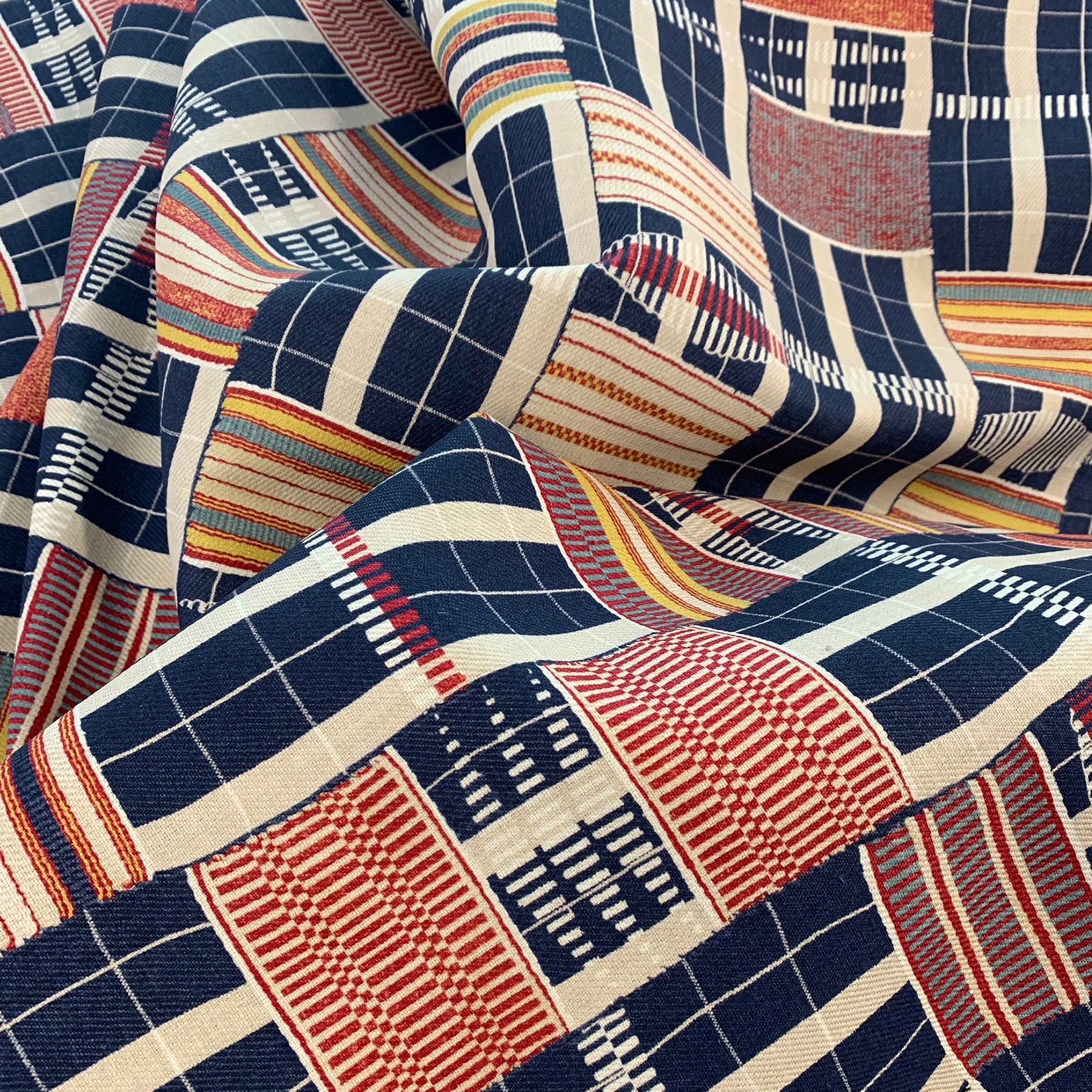
Kente weaving is an important traditional craft in the district, particularly in communities associated with Dzodze and Weta. The cloth is made by weaving narrow strips on a loom and joining them to create larger pieces of fabric.
Kente is valued for its colours, patterns, craftsmanship, and cultural significance. Its production depends on weaving skills that are learned through practice and passed between generations.
For the people of Ketu North, Kente weaving is both a craft and a source of livelihood. It also forms part of the wider textile heritage of the Ewe people, whose weaving traditions have contributed to the recognition of Ewe Kente in Ghana and beyond.
Pottery
Pottery is another established craft in Ketu North. Dzodze-Kuli is particularly associated with pottery, while Torkpo-Zomayi and Tadzewu are also identified as pottery-producing communities.
Pottery has traditionally provided people with practical household items and other useful products. The skills involved in shaping and preparing clay reflect the knowledge and experience of local craftspeople.
These communities contribute to the district's wider craft industry and help preserve traditional methods of production.
Basket and Mat Weaving
Basket weaving is also practised in the district, particularly in communities where people have developed skills in making woven items for everyday use and trade.
Mat weaving is associated with places including Afife, Avalavi, and Atiteti. These crafts depend on careful handwork and knowledge of the materials used in production.
Like pottery and Kente weaving, basket and mat weaving form part of the traditional skills that have supported households and helped maintain the district's cultural identity.
Blacksmithing and Traditional Knowledge
Blacksmithing has also played a role in the working life of Ketu North. As farming has traditionally been a major occupation, tools such as hoes have been important to agricultural production. Blacksmiths have helped supply these tools and other metal implements used in everyday life.
The district's traditional account also describes blacksmith workshops, known in Ewe as Yorhorme, as places where people once sought help following certain injuries, including human or dog bites, before modern medical services became widely available.
This account reflects the historical place of blacksmiths within local systems of knowledge and community care. It should not be taken as medical advice, since bites from people or animals can require prompt professional medical assessment and treatment.
Together, these crafts show how traditional occupations in Ketu North have combined practical skills, cultural knowledge, and economic activity.
Festivals and Cultural Heritage
Festivals are important occasions for communities to remember their history, honour their traditions, and bring people together. In Ketu North, traditional celebrations provide opportunities for residents, families, and people living elsewhere to reconnect with their ancestral communities.
The district's cultural calendar includes the Deza and Anyigbla festivals, which are identified in local accounts as important occasions for cultural gatherings.
Such celebrations help keep community traditions visible through ceremonies, music, dance, and the participation of traditional leaders and residents. They also provide opportunities for younger generations to learn about the histories and customs of their communities.
The annual pilgrimage of members of the Apostles Revelation Society to its international headquarters at Tadzewu is another important gathering associated with the district. Members travel from different places to take part in religious activities and maintain their connection to the church.
These gatherings form part of the wider cultural and religious life of Ketu North and bring visitors into the district.
The Shared Heritage of Ketu North
The people of Afife, Weta, Penyi, and Dzodze have distinct histories, traditional authorities, and local customs. At the same time, they share important elements of Ewe and Anlo cultural heritage, including language, farming traditions, music, dance, religious practices, craftsmanship, and community life.
Their histories show how different groups established settlements and developed their own identities while maintaining connections with neighbouring communities. Over time, farming, trade, intermarriage, shared cultural practices, and community gatherings have helped sustain these relationships.
Ketu North's heritage can be seen in its rice fields, weaving communities, pottery traditions, traditional leadership, music, festivals, and religious landmarks. These are not simply reminders of the past. They remain part of the lives and livelihoods of people across the district.
For anyone interested in Ewe history and culture, Ketu North offers an opportunity to learn about the traditions that have shaped the communities of Ghana's Volta Region. Preserving these histories, including the different oral accounts passed down through generations, helps ensure that the knowledge and experiences of the people continue to be shared with future generations.